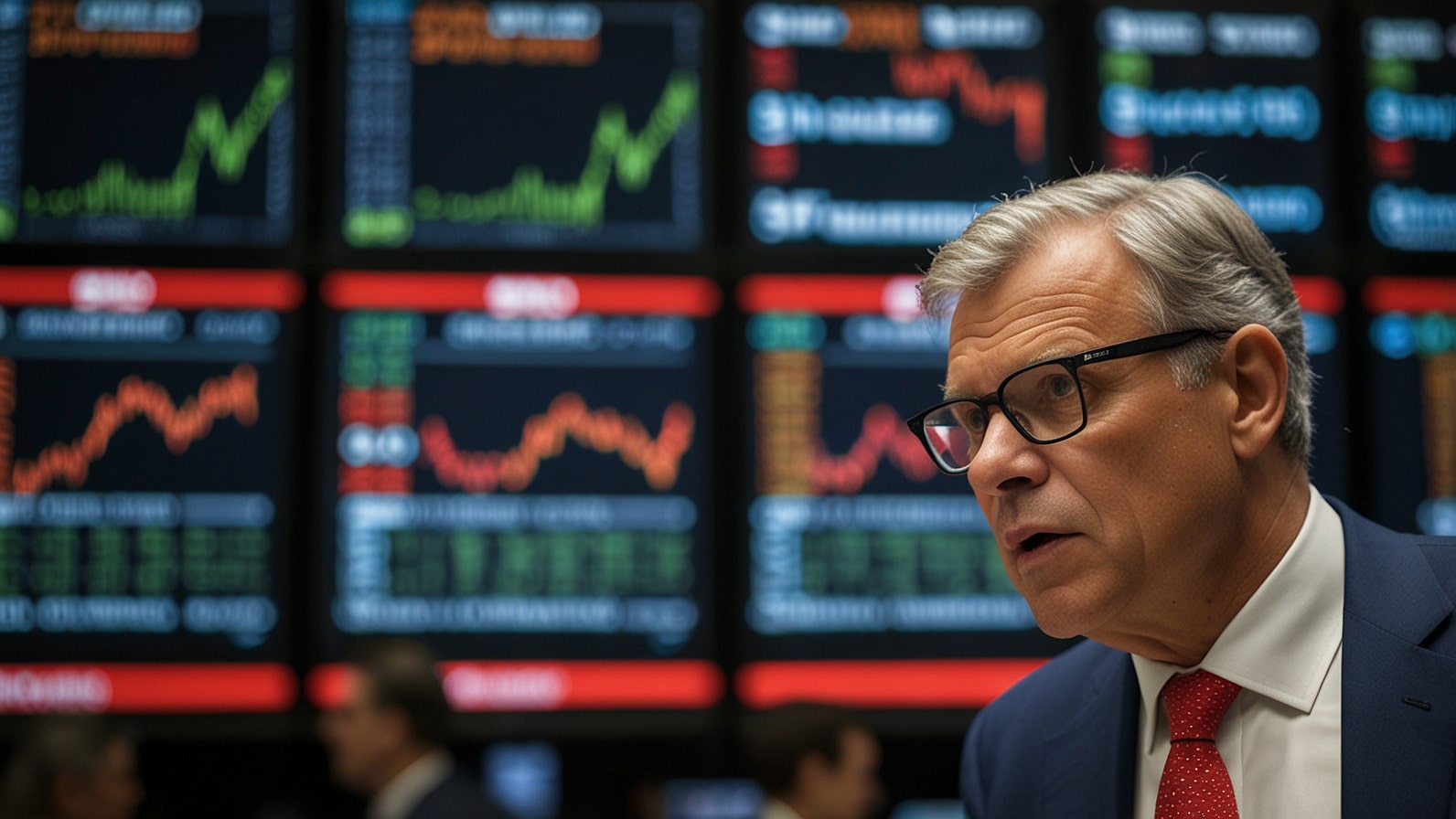
Shares in WPP fell more than 12% on Thursday in a sharp reminder of the vulnerability of the advertising industry as the largest ad agency in the world, WPP, plunged a bombshell profit alert on the back of an abrupt slowdown in client spending.
The FTSE 100 giant that includes Procter and Gamble and Unilever among its flagship companies even unveiled that the third-quarter revenue had fallen by four per cent on a year-on-year basis, much more than the one per cent against which the analysts had predicted.
This caused it to revise downwards its full-year guidance, and the underlying operating profit will now be 1.2 billion pounds, which is lower than the previously projected 1.3 billion pounds. and the resulting panic selling saw the stock fall to a seven-year low of 612 pence during trading.
The dark news that was announced a few hours into the trading day on the London Stock Exchange took many investors by surprise, who were already suffering at the hands of macroeconomic headwinds that were flogging discretionary budgets.
The global pressure on the world marketing trends, WPP, explained the decline in revenue due to the poor movement of the foreign exchange, and the wider churning in the ad budgets by the technological and consumer goods giant companies trying to cope with inflationary trends and geopolitical anxieties.
In North America, which contributes close to 40% of group billings, the brutal reduction was seven per cent, with the UK and Western Europe recording a slight improvement of two per cent. The emerging markets did not provide much relief as they shrank three per cent in the midst of currency turmoil in major hubs such as India and Brazil.
In the 150-year-old company, Chief Executive Mark Read, who is leading the firm through its most recent reinvention, put this in a terse statement as a short-term loss, promising to speed up cost-cutting measures to protect margins. The company, which recently completed a 700 million pound efficiency push last year, now aims to achieve a further 250 million pounds of savings by mid-2026 through a headcount reduction, office shunts and AI-enabled workflow streamlining.
However, there was general doubt: It is not an FX noise, but an indicator of clients shifting to in-house models and digital disruptors, one City analyst quipped. WPP is leaning on traditional media planning, too much, with TikTok operating at full throttle.
The blowback spread to the FTSE 100, which dropped 0.4% to end at 8,247 points, as other companies such as Publicis and Omnicom reaped benefits in the US. The misfortunes of WPP add to a miserable 2025 for the stock, which is down 28 per cent so far this year, and is performing worse than the index by an astonishing 35% points.
The group was once a favourite of the Mad Men era, but has not been able to make the transition to a data-driven, programmatic age, as competitors such as The Trade Desk are taking away market share with its TV/print legacy. The bitter departure of creative chief Rafael Llanos over the summer in September and a failed merger deal with French rival Havas earlier this year have been recent hiccups.
Going further, the Q3 trading update issued by WPP created a portrait of mixed fortunes. The creative agencies, such as Ogilvy and VML, reported strong one per cent growth and were supported by AI-powered campaign infrastructure, yet GroupM, the media investment agency, suffered the widest blow of six per cent revenue loss in reduced TV purchases.
Client retention was maintained at 92%, which is a positive factor; however, net new business inflows dropped to half of 1.2 billion pounds, indicating the loss of a competitive advantage. Adjusting FX-wise, revenues were down, albeit by only 1%, indicating the structural issues rather than the single currency ills- the 5 per cent appreciation of the British pound against the dollar during the quarter added to the hurt.
To Read, whose 4.5 million pound remuneration package is at stake, the pressure is on. Having been appointed in 2018 during a boardroom coup, he has been pitching so-called connected platforms such as WPP Open, an AI marketplace of ad tech, as a growth driver, without much take-up.
The company, with 114,000 employees in 100 countries, is currently launching a mass strategic assessment, and this may involve selling assets or spinning off non-performing parts of the organisation, such as the data analytics unit, Kantar. Read hinted that it was not ruling out aggressive actions to unlock shareholder value, raising expectations of a break-up similar to those that happened to the SoftBank empire in Japan.
Greater market dynamics do not provide much relief. The advert spending in the UK, estimated to increase by a paltry 1.5 per cent in 2025 according to industry researcher WARC, lags behind the rest of the world as corporations are restrained by economic stagnation.
On the other side of the pond, a hawkish speech by Federal Reserve Chairman Jerome Powell in the last days of the week cooled the hopes of rate cuts, which contributed to the strength of sterling and the load on export-intensive companies. However, there are glimpses: The swollen 15 billion pound order book on WPP up to 2026 gives it some cushioning, and collaborating with Meta and Google on privacy-compliant targeting would be one way to amp up the digital revenues.
With the dust finally settled, the fall of WPP highlights the existential turn of the ad industry. When algorithms dominate over human creatives, the question arises: Will this lumbering giant be able to change in time and restore its crown?
The current forward price-to-earnings ratio of 7.5 times is a bargain, but in the present carnival, investors should take note of a possible recovery, as the modern carnival is a lesson to old joints, now in a disrupt or die game.
The word of WPP is a wake-up call to the already depressed blue chips of London, already on the edges of energy crashes and trade war shocks: reinvention is the only thing that is going to help, and time is of the essence.