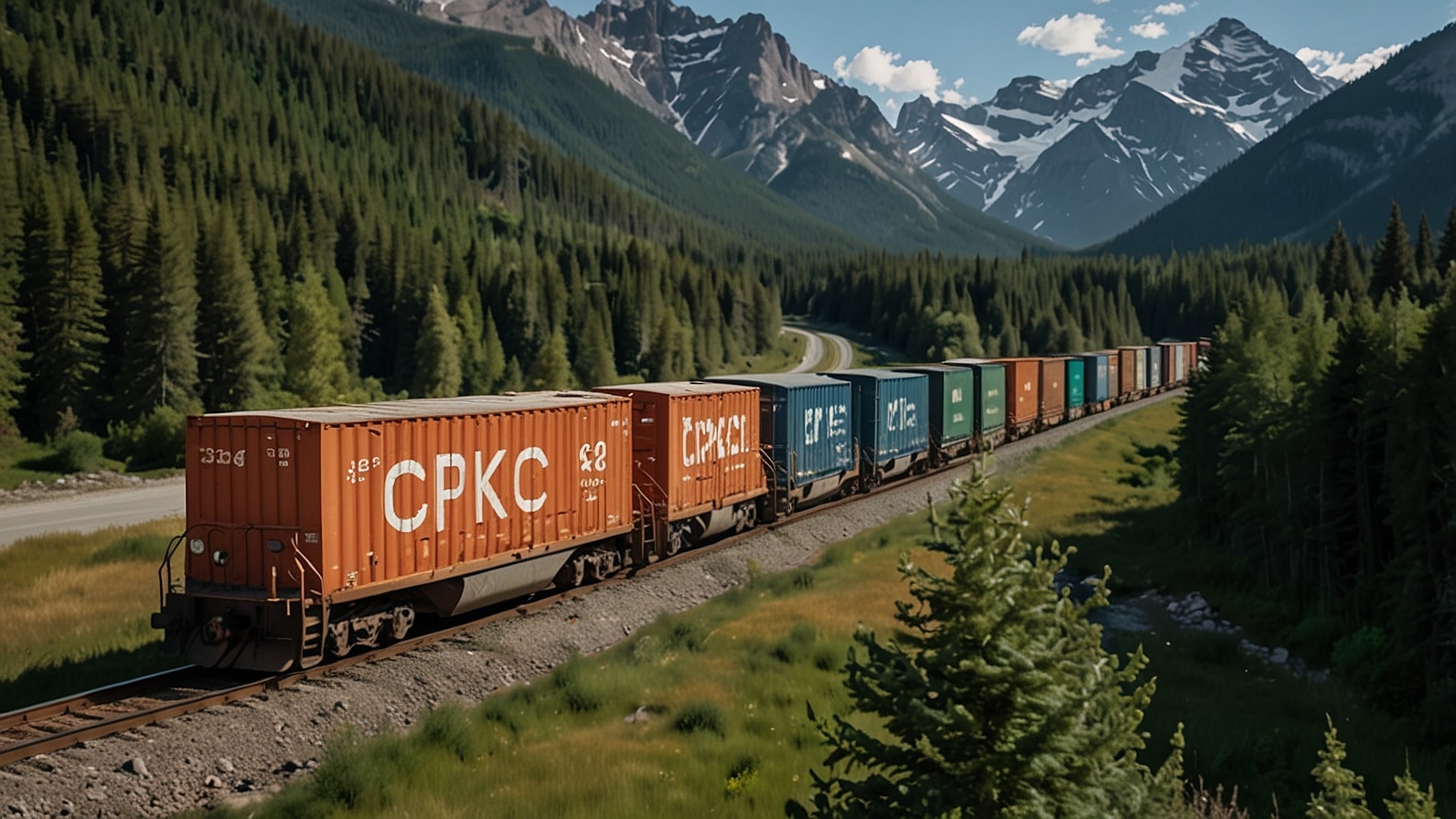
The continental giant of the railway, Canadian Pacific Kansas City, based in Calgary, reported a strong third-quarter performance that was resistant to increasing trade tension and impending competition threats on the other side of the border.
The company recorded a 10 per cent annual growth and reported net income of $917 million during the period ending September 30 due to its soaring volumes of major commodities despite the U.S. tariffs that cut across some commodities. Revenues also increased by 3% to $3.66 billion, and core diluted earnings per share have improved to 1.10 dollars compared to the 99 cents in the previous year, just one penny lower than the expectations of analysts.
The best story was volume growth as the total shipping activity increased by five per cent. The front runners were grain, potash and intermodal containers as they represented strong demand in the agricultural heartlands as well as in international trade routes.
Direct Canada-Mexico deliveries caused a buffer and highlighted the strategic nature of the CPKCs’ special north-south net due to its 2023 acquisition of Kansas City Southern. This three-way footprint, between Vancouver and Veracruz, makes the railway the only continuous connector in North America between the Canadian, U.S. and Mexican borders, which shields it to some extent against east-west shocks.
But there was unmistakably headwind. The sectoral tariffs of U.S. President Donald Trump hit forest products, so the volumes dropped, and the cross-border hauls were cut by 50 per cent on imported steel. Energy, chemicals, and plastics, too, dropped, which creates an image of selective resilience in the context of protectionist policies.
Chief Executive Keith Creel praised the implementation of the team, saying that the railway was creating diverse, profitable growth amidst the constant macro and trade policy pressures. He highlighted the efficiencies in operations, pricing power that continued to bring the operating ratio on the positive side by 220 basis points.
To make the story more interesting, there is the proposed merger between U.S. competitors Union Pacific and Norfolk Southern, which was announced in July and is worth $85-billion. The transaction would create a transcontinental giant that owns more than 80,000 kilometres of track in 43 states, dominating freight of 40 per cent of American freight.
Creel said it brings new supply chain risks never seen before, concentrating decision-making in a single place and increasing customer expenditures. In the absence of strict requirements, he contended, it eliminates competition.
The marketing head of CPKC, John Brooks, observed that the steel woes are compensated by domestic traffic and routes to Mexico, but analysts doubt that a Canadian voice would be heard by the regulators. Creel has 40 per cent of its business based in the U.S., one-third employees are based in the U.S., and it has invested billions of dollars there, so he insists that CPKC is covered with the American flag.
The stock fell a little after the earnings due to tariff fears and merger ambiguity, but the performance confirms the cornerstone of CPKC in the Canadian economy. Being the second-largest player in the rail sector in the country, it transported prairie wheat and B.C. lumber, contributing to both jobs and GDP equally.
The tariff uproar is a reflection of larger Canadian business gripes as exporters are gearing up for retaliatory spirals as the Trump administration contemplates 25 per cent levies on non-USMCA autos and beyond.
Creel is also optimistic, with an emphasis on precision scheduled railroading, which is a technological change that reduces dwell times and enhances reliability. Locomotives, track upgrades, and digital twins will bring additional returns. Canada is anchored on cross-border trade, which constitutes 75 per cent of the economy; hence, the agility of CPKC is significant. With winter approaching, the harvest of grain is in sight, and the production of manufactures in Mexico is on a boom, the railway looks at the second half of the year with hope.
The news of leapfrog profits in this quarter is not only the survival but also a strategic move in the turbulent times. To Canadian companies that have to operate under U.S. protection, CPKC would be a role model: diversify missions, optimise assets, and lobby hard.
The stakes increase as the reviews of mergers take place at the Surface Transportation Board, which now has a Republican tilt to it. The redesigned freight dynamics with green light on UP-NS would be achievable; nevertheless, the CPKC remains ahead of competitors in the north-south. The Calgary pioneer has set the path in a world of disintegrated trade blocs.