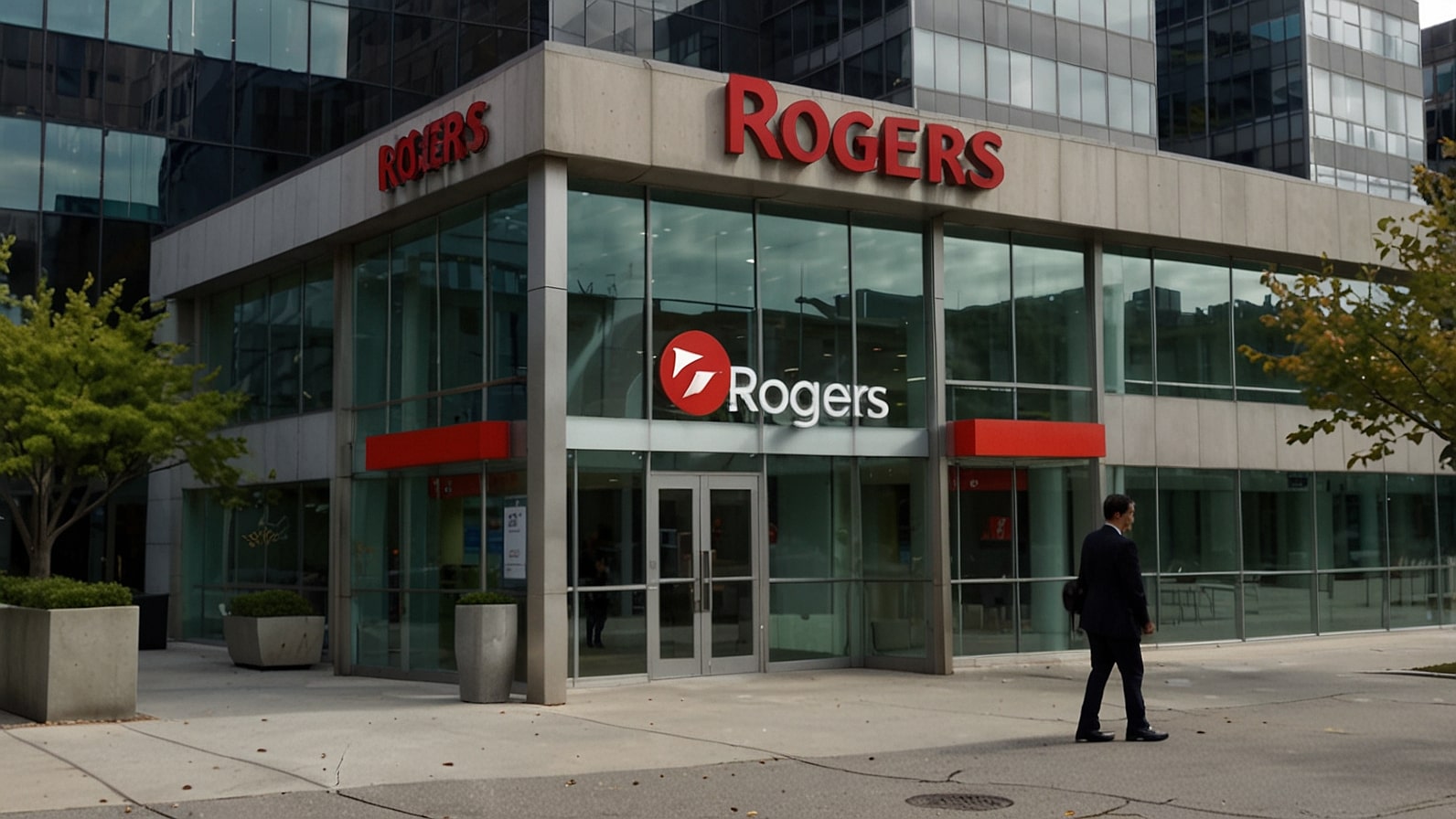
Toronto-based telecom giant Rogers Communications Inc. posted record third-quarter results on October 31, 2025, with the company’s revenue surging 12% to 5.1 billion in its continued push to deploy 5G in its networking and its new satellite-to-mobile text service in its waterways.
The cash cow of the company, wireless service revenue, increased by 15% to 2.4 billion, with upwards of 250,000 subscribers added to its books, partly due to the inclusion of bundled 5G services, and partly due to the inclusion of Shaw Mobile, which took place after the merger between the two firms in 2023.
Chief Executive Tony Staffieri celebrated the quarter as a landmark in connecting with each other, highlighting how AI-powered networks are reducing the latency of remote workers and IoT devices in rural outposts.
The profits shine through the satellite project, which was launched nationwide in September, which allowed text messaging through low-Earth orbit satellites in places outside the cellular towers- Great Lakes freighters to B.C. fjords. The service, which has had 500,000 activations early, is powered by a partnership with Lynch Global and utilises the 11 million wireless customers of Rogers.
According to Staffei in the earnings call, this fills the digital divide gap in Canada, which is in line with the Ottawa Universal Broadband Fund of 2.75 billion. The broadband internet revenue slightly increased by 8% to become $1.3 billion, even in the face of cord-cutting pressure due to fibre-optic upgrades to 4 million homes and the introduction of gigabit speeds in urban cores.
Cable media, though, trailed with the lowest point of 5% to $500 million and were affected by the weaknesses of advertising under the analysis of economic shivers and a weakening TV market. However, in total, adjusted EBITDA increased 18% to 2.2 billion, with a free cash flow of 800 million, allowing $400 million in dividends and 300 million in settling debts.
The net income, available to the shareholders, is increased to as much as 650 million or 98 cents per share, as compared to 450 million last year, which easily outpaced analyst whispers by 15 cents. The merger synergies that Shaw is enjoying, to the full extent of 600 million a year, are the result of cost-cutting through the unified call centres and combined billing.
There are storm clouds on several fronts. Growing competition on the part of Quebecor Videotron and the mobility of Telus forces down the prices, and the current CRTC inquiry into wholesale access may force Rogers to make its fibre lines open to competitors, potentially restricting margins to 45 per cent.
Essentials U.S. tariff threats under a possible Trump administration hang over the imports of devices; 70% of smartphones are sourced south of the border. Staffieri warns of a possible 5% price increase in case of a duty spike. Any labour unrest at Canada Post indirectly serves to enhance the pivot of parcel delivery by Rogers through Rogers Pickup, but regulatory fines on network outages, which ran to 20 million this year, hurt.
In Toronto, the trading soared by 6% and the market capitalisation rose above the 30 billion mark, beating the TSX telecom index. Scotia Capital analysts had increased targets to 65, which was based on the satellite advantage as a differentiator in a 5G scenario that was maturing.
In the case of Canada, which has a $100 billion telecom industry, the boom of Rogers justifies the value of consolidation: the Shaw merger, previously demonised on the basis of monopoly risks, is currently providing 20% ROIC and supporting 40% wireless market share.
In the future, it has full-year guidance of 10% revenue growth to $20 billion and a flat capital spending of $3 billion on spectrum auctions and edge computing for AI. In a preview of Rogers Nexus, a B2B product that will be launched in Q1 2026 to serve enterprise 5G private networks, Staffieri focused on manufacturers and ports. Amid Bank of Canada rate cuts to 3.5%, cheaper borrowing costs (Debt/EBITDA 3.2 times) that make the debt at Rogers free up the gunpowder to take the spectrum bids and future streaming M&A.
The connectivity of 12 million households, an operation of this quarter, makes Rogers the connectivity kingpin of Canada, which has wired the factories, oil sands in Alberta, and Toronto so that the economy can run smoothly. When media moonshots are pursued by peers such as Bell, Rogers triples up on pipes: the backbone that the hybrid world can count on.
As satellite text messages pop off like Arctic tugs and autonomous trucks fill their tanks with 5G, the spirit of the north of 60 is still alive on the telecom side, one signal at a time. In an election-year frenzy of digital equity, Rogers is not only recording victories but is building tomorrow’s Canada.